
The world of retail is evolving rapidly, and digital transformation has become essential for survival, especially for independent fashion retailers. In the UK, the e-commerce business has plateaued since the end of the pandemic and is around 25 to 30% of total retail sales. However, smaller retailers must leverage digital tools to remain competitive, streamline operations, and create an exceptional customer experience.
We will explore how you, as an independent retailers, can implement digital strategies to thrive in today’s omnichannel landscape, with a focus on enhancing customer experiences, optimising operations, and adapting to changing consumer behaviours.
Before we start, we wanted to get results from a digital tool you know and hopefully your business loves using every week: ChatGPT (or any other AI solution you use today).
At the end of this article, find 30 ways to improve sales in your store (we have added our own experience to it yet the big ideas were generated in 1 minute over 2 prompts (question or instruction given to ChatGPT).
ChatGPT can help you with content creation to improve your social media or marketing message, help improve sales, recruit better talents and set up procedures and manuals to beat the competition.
Understanding Digital Transformation in Retail
Digital transformation refers to integrating digital technology into all areas of a business, fundamentally changing how it operates and delivers value to customers. For independent fashion and garden retailers, this means adopting digital tools and platforms that not only improve efficiency but also enrich the customer journey across online and offline touchpoints.
The aim is to create a seamless shopping experience that connects brick-and-mortar stores with online channels, giving customers the flexibility to engage with the brand however and whenever they choose. This integration includes websites, social media, mobile apps, in-store technology, and customer service platforms, all working together to build a cohesive retail ecosystem.
However, remember that technology will not be the reason for the failure of your digital project. Implementation is where the challenge is (source: Robin Speculand who interviewed over 5000 business owners and less than 3% mentioned technology as the reason for failure!).
A major issue we see is business owners being overwhelmed by the number of choices, offers and proposals they receive. They must have clarity on what their business needs and not what they want.
Business owners must be ruthless when it comes to critically analyse what salesperson will be pushing to them.
The strength of a salesperson is to sell you “the destination”. Your job as a business owner is to understand every step of the process from where you are today to where you need to be (your destination!).
TOP TIP: Apply this rule whatever you are buying (product, service or expert advice!)
I have seen a digital marketing agency being paid £4000/ month and trying to avoid producing minutes after each monthly meeting. A great way to be less accountable!
Show creative and critical thinking and ensure that, on every digital project, you compare the pros and cons on at least 3 options.
When making a decision, factor in the financial investment, the time it will take to deliver the results you want, the level of experience, resilience, adaptability, open mindedness and problem solving skills of your team. All the above points are important and our GFM platimum formula approach reduces underperformance or those mistakes by 50 to 90%.
We will happily share it with you for free. Alternatively, get the Platinum Formula from here (Click to access the LFBA online course).
1. Enhancing Customer Experience
The first key to successful digital transformation is to provide an outstanding customer experience, which is now the primary differentiator for many retailers. Let's explore how independent retailers can implement digital tools to enhance customer experience:
a) Store Data and Personalisation through Data Analytics
One of the greatest advantages of digital transformation is the ability to gather data on customer preferences, purchase history, and behaviours as well as gather data by product category and sub-category.
For a store doing £300 000, it is quite normal to track 9 to 12 product categories and around 25 to 30 categories if you are doing £1000 000 in yearly sales.
Track sales, discount and stock levels at retail at least every month.
Independent fashion retailers can use this data to offer personalised recommendations, promotions, and content. For example, a fashion retailer might analyse customer purchase patterns to identify which styles are most popular and then send tailored email campaigns featuring those products.
Example: If a customer frequently purchases bohemian-style clothing, the retailer can create a personalised email featuring bohemian dresses, skirts, and accessories. By doing this, the retailer can build stronger connections with customers and increase the likelihood of repeat purchases.
Only track the necessary data and spend time on data for which you will take a meaningful action every month or so. Have a dashboard that is unique to you as each store has its own needs and goals.
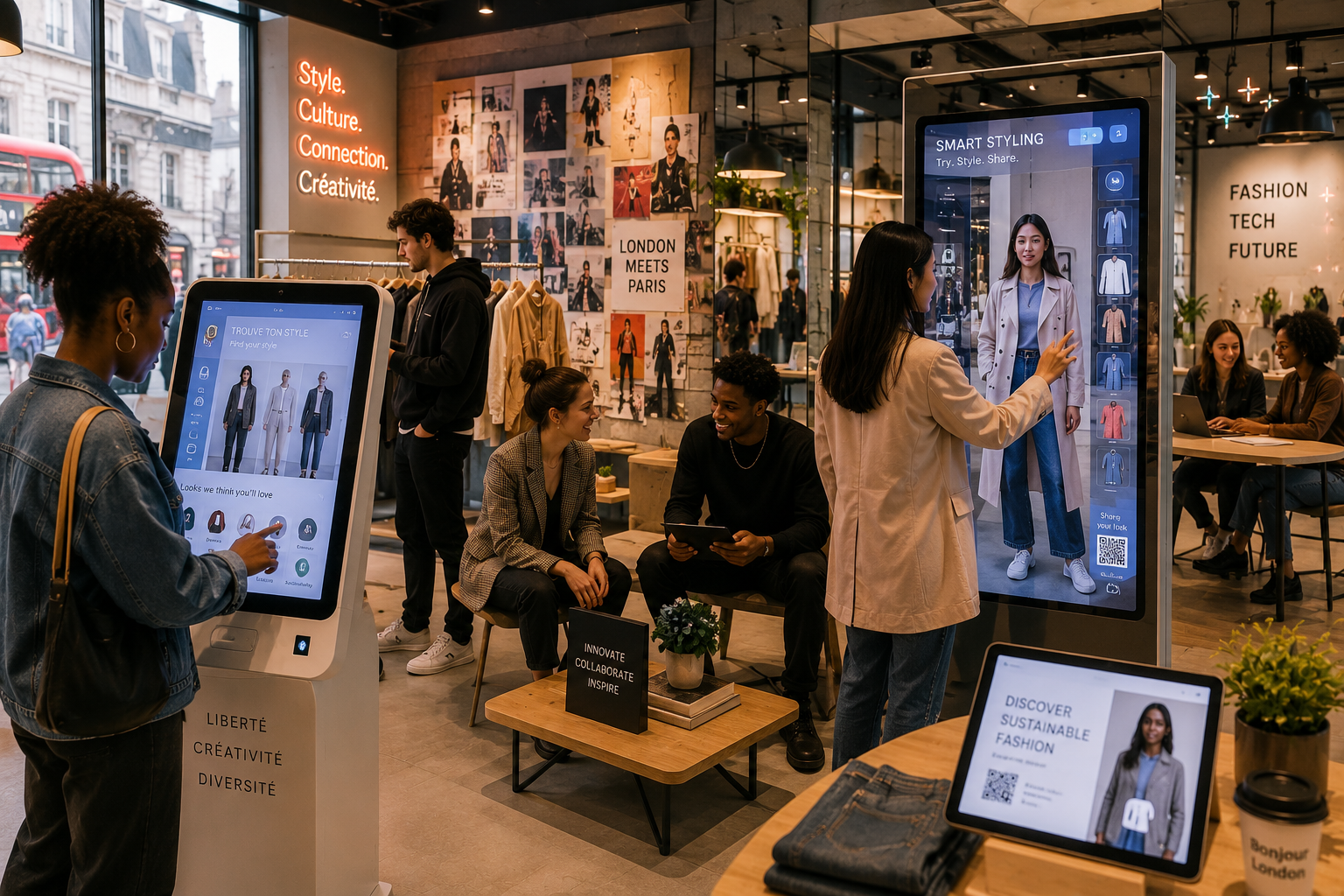
b) Enhancing In-Store Experience with Digital Kiosks and QR Codes
Digital kiosks and QR codes are excellent tools for providing additional product information and enhancing the in-store experience. Retailers can implement digital kiosks that allow customers to browse styling tips, product details, and tutorials. This not only educates the customer but also creates an interactive experience that keeps them engaged. Furthermore, the website page hosting the QR code can be catching customer data in addition to what you do in store unless you will promote a special event or a 1-2-1 session.
Example: A fashion retailer could display QR codes next to each garment or accessory in the store, allowing customers to scan the code to access detailed information about the description, how to wear it and how to mix it with other pieces. This enhances the customer experience by providing valuable information while also showcasing the retailer's expertise.
c) Integrating Augmented Reality (AR)
Augmented Reality (AR) offers a unique opportunity for retailers to bridge the gap between online and in-store experiences. Independent fashion retailers can implement AR technology to create virtual fitting rooms, allowing customers to try on clothes virtually before making a purchase.
Example: A fashion retailer can use AR apps that enable customers to see how a dress or jacket would look on them without physically trying it on. This technology not only reduces the number of returns but also encourages customers to make confident purchase decisions.
2. Streamlining Operations with Digital Tools
Efficient operations are crucial for retailers to maintain profitability and stay competitive. Digital tools can help streamline various aspects of the business, from inventory management to order fulfillment.
a) Implementing Stock Management Systems and Merchandising Planning
Stock management and specifically merchandise planning (open to buy plan) are a common challenge for independent retailers, especially when dealing with multiple sales channels. A digital inventory management system allows retailers to track stock levels in real time, reducing the risk of overstocking or running out of popular products. Freshness sells!
Make sure you bring fresh goods every month across every product category even if it means you need to push “pressure” on current suppliers or find new ones.
Example: A retailer might use a stock management system to monitor stock levels across their physical store and e-commerce platform. This ensures that customers receive accurate information about product availability, reducing the likelihood of missed sales or backorders.
b) Automating Customer Relationship Management (CRM)
A robust CRM system enables retailers to manage customer interactions, track purchase history, and send personalised marketing messages. Automating CRM tasks saves time and ensures that customers receive consistent and timely communication.
Example: An independent fashion retailer can automate follow-up emails to customers who recently made a purchase, thanking them for their order and suggesting complementary products. This strategy encourages repeat business and increases customer loyalty. Have different email series for each situation (new subscriber, new client, inactive client, UK versus non UK client …).
c) Utilising Chatbots and AI for Customer Support
Providing excellent customer service is essential for maintaining a positive brand image, but it can be challenging for independent retailers to manage customer inquiries efficiently. Chatbots and AI-powered customer support systems can handle routine inquiries, freeing up time for human staff to focus on more complex issues.
Example: A fashion retailer could implement a chatbot on their website to assist customers with questions about sizing, order status, or returns. This provides instant support, improves customer satisfaction, and reduces the workload for customer service teams. A well trained live agent on a chatbot can help you sell more.
3. Staying Competitive in an Omnichannel Landscape
The modern retail landscape is omnichannel, meaning that customers interact with brands across multiple touchpoints, both online and offline. Independent retailers must adopt strategies that provide a seamless and integrated shopping experience to stay competitive. Review the different alternatives and pick the one that makes sense for your business today.
a) Offering Click-and-Collect Services
Click-and-collect services are becoming increasingly popular, allowing customers to shop online and pick up their orders in-store. This hybrid approach combines the convenience of online shopping with the immediacy of in-store pickup, making it a valuable service for busy customers.
Example: An independent retailer can offer click-and-collect services, enabling customers to order a dress or suit and accessories online and collect them from the store at their convenience. This reduces shipping costs, increases foot traffic, and provides a competitive edge. Take advantage to build trust/ sell more while the customer comes to pick it the item(s).
In some stores we work with, we had a 30% increase in sales within the next 30 days thanks to this interaction inside the store.
b) Optimising Mobile Commerce (mCommerce)
Mobile commerce is rapidly growing, with more consumers shopping on their smartphones. Independent retailers need to ensure that their websites are mobile-responsive and provide a smooth shopping experience on mobile devices.
Example: A fashion retailer should optimise their website for mobile users by ensuring fast load times, intuitive navigation, and easy checkout processes. Offering mobile payment options like Apple Pay or Google Wallet further enhances the shopping experience.
c) Engaging Customers through Social Media and Influencers
Social media platforms are powerful tools for engaging customers and building brand awareness. Independent retailers can leverage platforms like Instagram, Pinterest, and TikTok to showcase their products, share styling tips, and collaborate with influencers. Consider live selling if it is appropriate for your store.
Example: An independent fashion retailer could collaborate with local influencers to showcase their latest collections, generating buzz and driving traffic to their website or physical store.
Not every influencer will generate sales for you. Choose them right, ask the right questions and reduce the risk if necessary by planning a commission rather than a fixed fee!
As a conclusion, digital transformation is no longer optional for independent fashion retailers—it's a necessity for survival in today’s competitive market.
To optimise success, review the various alternatives offered to you and then focus on implementation. Rather than having a digital strategy, create a strategy built for a digital world.
The journey of digital transformation requires ongoing adaptation and innovation. Retailers who embrace these changes and continuously implement new digital strategies will be well-positioned to succeed and grow in the dynamic world of retail.

Annexe
Here are practical ideas for leveraging digital tools and AI to enhance each of the 10 strategies for your retail store:
10+ AI solutions to improve sales and customer experience in your retail store.
1Loyalty Programs
1)Mobile App: Develop an app where customers can track their points and receive notifications about rewards. Great software options are available from www.appsumo.com for a low one-time fee.
2)AI Analytics: Use AI to analyse purchasing patterns and tailor rewards that resonate with individual customers.
3)QR Codes: Implement QR codes for quick enrollment in the loyalty program at checkout or during a promotion online or offline.
2Workshops and Classes
1)Online Booking System: Set up a digital platform for customers to easily register for workshops or style sessions and receive reminders.
2)Webinars: Host live or recorded online workshops, allowing broader participation and creating digital content for future use.
3)Follow-up Surveys: Use AI-driven surveys post-workshop to gather feedback and tailor future sessions.
3Seasonal Promotions
1)Email Automation: Set up automated email campaigns that target customers with seasonal promotions based on their previous purchases.
2)Social Media Ads: Utilise AI to run targeted ads on social media that promote seasonal events or sales to specific customer segments.
3)Countdown Timers: Use website countdown timers for limited-time promotions to create urgency and drive traffic.
4Personalised Recommendations
1)AI Product Suggestions: Implement an AI tool on your website that suggests products based on past purchases or browsing history.
2)Customer Profiles: Create detailed customer profiles that store preferences and allow for tailored marketing messages.
3)Chatbots: Use AI chatbots to engage customers in real-time, providing personalised product recommendations when they visit your site. With some retail clients, we have used their live agent chatbox to convert visitors to buy while they were spending time on a product or payment page.
5Exclusive Previews
1)VIP Email List: Create an email list specifically for loyal customers to receive exclusive previews and offers. Have separate email lists to personalised the message.
2)Mobile Push Notifications: Send push notifications through a mobile app about upcoming products or sales for loyalty program members.
3)Early Access Codes: Generate unique access codes for customers to use online or in-store for exclusive previews.
6Social Media Engagement
1)Content Scheduling Tools: Use platforms like Hootsuite, Postly or Buffer to schedule posts and maintain consistent engagement.
2)AI Analytics: Leverage AI tools to analyse engagement metrics and optimise content based on what resonates with your audience.
3)User-Generated Content: Encourage customers to share their fashion styling or gardening successes on social media, which can be promoted on your channels.
7Community Involvement
1)Event Management Platforms: Use tools like Eventbrite to organise and promote community events, allowing for easy registration.
2)Social Media Events: Create online events or challenges (e.g., a photo contest) that encourage community participation and social sharing.
3)Local Partnerships: Collaborate with local influencers or businesses and promote joint events through digital channels.
8Quality Customer Service
1)AI Customer Support: Implement AI chatbots (or a simple live agent chatbox) on your website for 24/7 customer service to answer common questions.
2)Feedback Systems: Use digital platforms to gather customer feedback on service quality, and analyse data for improvement.
3)Training Modules: Use online training tools to enhance staff skills in customer service and product knowledge.
9Email Newsletters
1)Segmentation: Use AI to segment your email list based on customer behaviour and preferences for targeted newsletters. Have at least 3 to 5 segments of customers.
2)Content Personalisation: Leverage tools that personalise email content dynamically based on customer interactions and interests. You can effectively use ChatGPT to provide those personalised emails.
3)Automated Campaigns: Set up automated email campaigns that trigger based on specific customer actions, such as abandoned carts. Have a campaign as well while onboarding new subscribers, inactive subscribers for over 6 or 12 months and high spenders.
10Feedback Opportunities
1)Digital Surveys: Use platforms like SurveyMonkey to create and distribute customer feedback surveys easily.
2)AI Sentiment Analysis: Utilise AI tools to analyse feedback and reviews, identifying trends and areas for improvement.
3)Interactive Feedback Kiosks: Install digital kiosks in-store where customers can quickly provide feedback on their experience. It can be done with a tablet or better a staff member with a tablet or just pen and paper!





Responses